
An AI-powered mobile product for learning spoken Chinese — built end-to-end with AI agents as part of the development workflow.
Tilder combines structured learning, AI pronunciation scoring, and human teacher review to help students move from learning Chinese to actually speaking it.
My role: Product direction · Learning methodology · UX & UI decisions · Architecture decisions · AI-agent orchestration · Testing · Deployment
The product
Tilder started from a problem I experienced while teaching Chinese.
Students could study lessons online, but speaking practice still depended on scheduling calls. Pronunciation feedback was difficult to scale, and the learning process became fragmented between self-study and live practice.
Tilder turns that process into one continuous product experience:
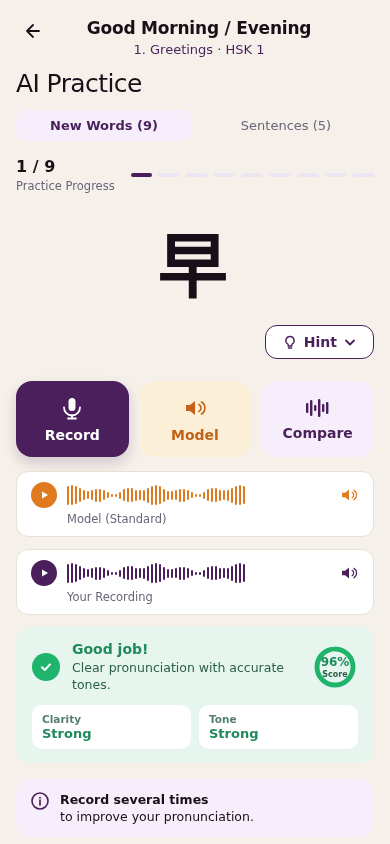
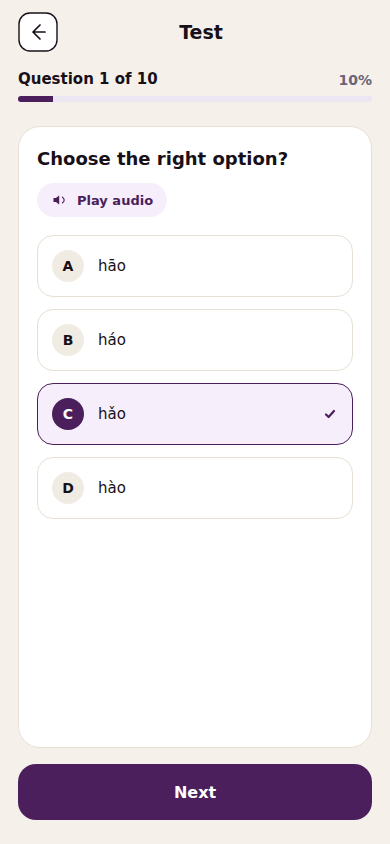
Students practice pronunciation with AI feedback, complete structured tests, and submit their speaking performance to an assigned teacher for final review.
The goal is not simply to help students recognize Chinese.
The goal is to help them speak it correctly.
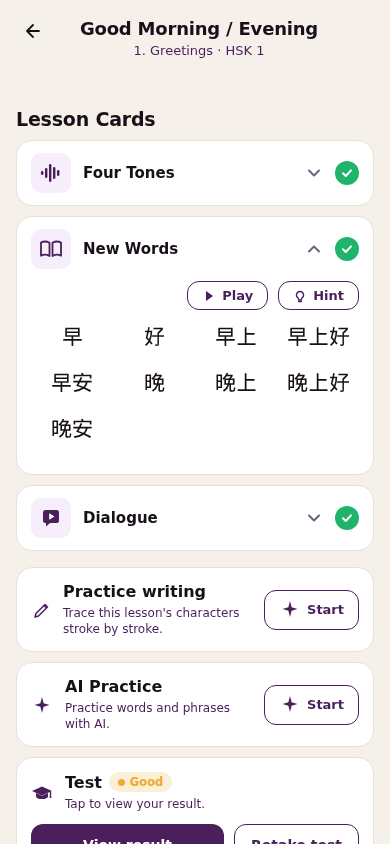
1 · Learn the lesson
2 · Speak, get AI feedback
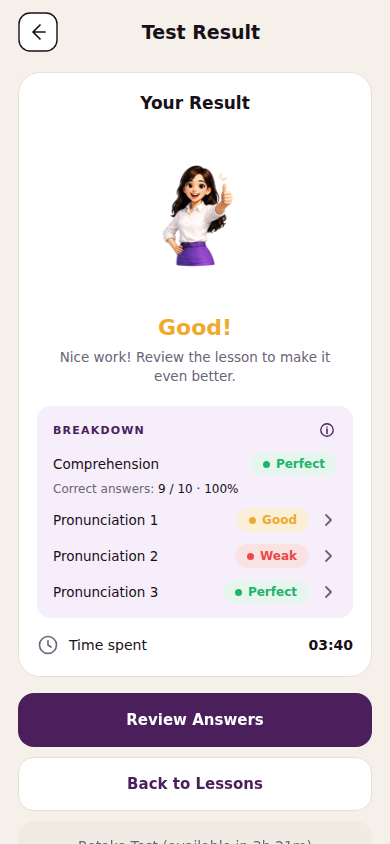
3 · Test
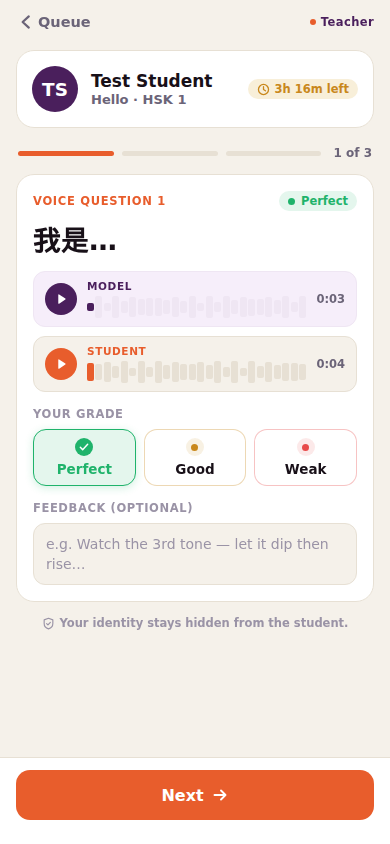
4 · Human teacher review
What I built
Tilder has grown into a multi-role learning system spanning the student experience, teacher review workflows, content management, AI integrations, and backend infrastructure.
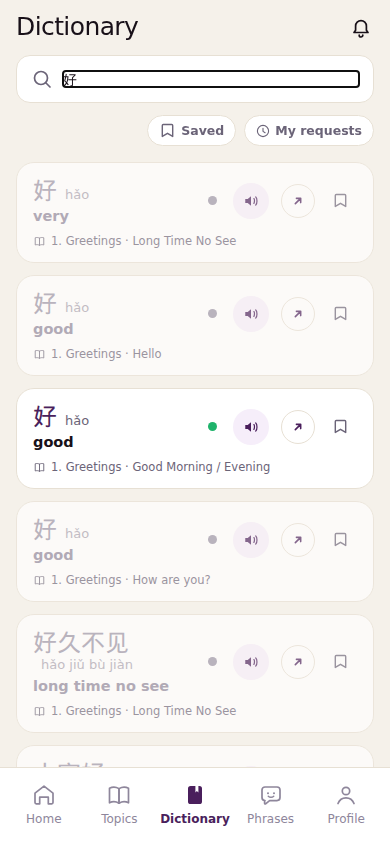
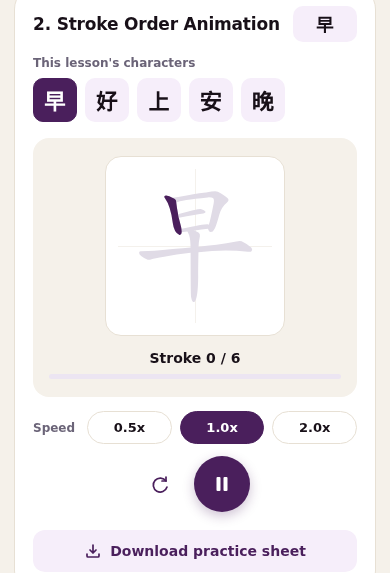
The product includes structured lessons, pronunciation practice, mixed-format testing, human teacher grading, writing practice, a full Chinese dictionary, student progress systems, season-based GPA mechanics, multilingual content, and separate operational tools for teachers and administrators.
Tilder is currently pre-launch and preparing for its first store release. I do not present user, revenue, or engagement numbers because the product does not have them yet.
How it works
Tilder uses a React Native / Expo mobile client for both students and teachers, with role-based experiences inside a single application.
Supabase provides authentication, PostgreSQL data storage, Row-Level Security, file storage, and serverless Edge Functions.
External AI and platform services are accessed through server-side functions rather than directly from the mobile client, keeping third-party credentials outside the application bundle.
A separate React + TypeScript web dashboard supports content authoring and operational workflows for editor, admin, and owner roles.
React Native + Expo · role-based routing, one shared login
React + TypeScript · content authoring & operations
server-side only — no third-party keys in the client
The architecture has evolved with the product: product requirements come first, and technical decisions are made around the behavior the product needs.
Building with AI agents
AI agents are not a feature I added to my workflow at the end. They are a core part of how I build.
I define the problem, product behavior, constraints, and expected outcome. I use agents to research options, implement scoped work across the stack, investigate problems, and execute longer technical tasks.
But an agent saying "done" is not enough.
The result gets independently verified. When something fails, the goal is to find the root cause rather than patch the visible symptom. Then I iterate.
This workflow has been used across Tilder — from evaluating and integrating pronunciation-scoring providers to implementing database migrations, role-based access, Edge Functions, multilingual product flows, testing, compliance audits, and deployment preparation.
I don't describe Tilder as "an app AI built for me."
I built Tilder through human-directed product and engineering decisions, with AI agents providing enormous execution leverage.
What I own
I did not come into Tilder knowing every technology required to build it.
That is part of the story.
A few years earlier, when I needed an online learning platform, I taught myself WordPress and LearnDash and built one.
When that platform became too limiting for the product I wanted to create, the problem became much bigger.
Today, AI tools and agents have changed what I can do about it.
I do not pretend to have every technical answer in my head.